
Ayurveda and Women’s Health, Pain-Free Periods

Ayurveda and Women’s Health, Pain-Free Periods

Can Ayurveda Help With Pain-Free Periods?

Yes. Ayurveda addresses painful periods by correcting hormonal rhythm, digestion, stress response, and nervous system balance. Instead of suppressing symptoms, Ayurvedic care focuses on restoring flow, reducing inflammation, and supporting the body’s natural cycle — especially relevant for modern European lifestyles.

Why Period Pain Is Increasing Among European Women

Modern lifestyles across Europe have quietly altered menstrual health:

  • High mental load & performance pressure
  • Irregular meals and digestive stress
  • Cold climates affecting circulation
  • Late dinners and screen exposure disrupting hormones

Ayurveda views period pain not as “normal”, but as a signal of imbalance — often linked to digestion, stress, and lifestyle rhythm rather than the uterus alone.

For many women, experiencing pain several days to weeks before the onset of the monthly period is an unfortunate reality. Research shows that almost 40% of women experience premenstrual symptoms, which disrupt their daily lives.

What Does Ayurveda Say About Women’s Health?

According to Ayurveda, during a woman’s menstrual cycle, the Apana vayu, which is connected to the Vata dosha and governs the downward flow of energy in the pelvis, is working to cleanse the body of the uterine lining once menstruation takes place. The increased Vata qualities in the body can result in symptoms such as anxiety, insomnia, fear, and scatteredness, inability to focus, feeling cold, constipation, and tiredness.


Ayurvedic Terms Explained 

  • Apana Vata – Governs downward flow; imbalance causes cramps and irregularity
  • Agni – Digestive fire; weak Agni leads to toxin buildup affecting cycles
  • Ama – Metabolic residue that contributes to inflammation and pain
  • Ojas – Vital essence supporting hormonal stability and resilience

Period Symptoms Ayurveda Looks At Differently

Period Symptom Ayurvedic Interpretation
Sharp cramps Vata imbalance and restricted circulation
Heavy bleeding Pitta imbalance with excess internal heat
Clotting Accumulation of Ama (metabolic residue)
Fatigue Low Ojas and weakened digestive strength

Ayurvedic Tips/Solutions for Period Pain Relief

1. Yoga

Practicing Yoga daily and certain asanas during that time of the month can help keep period pains at bay. In general terms though, it is good to take rest during the first three days of menstruation. If you suffer from cramps or lower back pain, you can practise some soft and simple poses to ease your discomfort.

Child’s Pose (Balasana)

Yoga is not merely a practice of stretching the body; it is a way of creating harmony within. Many postures gently awaken and support the internal organs, offering a quiet, restorative massage from the inside. Child’s Pose allows the reproductive organs to soften and relax, while releasing built-up tension in the back, shoulders, and neck — encouraging a sense of ease, balance, and inner calm.

Inverted leg pose – Viparita Karani

Physical, mental, and emotional benefits abound in this pose. The inverted leg pose improves circulation and digestion, lowers blood pressure, boosts energy levels, and soothes your nervous system. It’s also said to increase creative thinking and problem-solving.

During menstruation, avoid full inversions.
Practise only those postures where the pelvis stays grounded or remains at the same level as the head. Poses that elevate the pelvis above the head — such as

1. Salamba Sarvangasana (supported shoulder stand) and

2. Sirsasana (headstand) — reverse the body’s natural downward flow (Apana Vayu),

which supports the menstrual process. Interrupting this flow may place unnecessary strain on the body and, over time, contribute to hormonal or energetic imbalance.

Wide Angle Seated Forward Bend – Upavistha Konasana

Whether you are menstruating or not, the wide-angle seated forward bend is a deeply supportive posture when everyday stress begins to accumulate. As with most yoga asanas, its benefits extend beyond a single effect. This gentle forward fold stimulates the abdominal organs, encouraging circulation and relaxation in the pelvic area — which can help ease menstrual discomfort both immediately and over time.

Reclining Twist – Bharadvaja

One of the most popular poses for dealing with menstrual pain is the reclining twist.

Why? Because it feels good and has massive health benefits. For starters, your back and hips will get a great stretch (much-needed if you’re dealing with aches and pains from your period). Moreover, your digestive organs will get the required stimulation due to the fresh blood flow from this pose.

Cobra Pose – Bhujangasana

The Cobra asana helps to stretch the abdominal and lower abdominal portions. Your lower back and lower belly will both benefit from the cobra position. This helps relieve menstrual cramps and tension in the lower back.

2. Dietary Guidance During Menstruation – Eat light, warm, cooked foods

Although this guidance may appear simple, it can be challenging for many women — particularly those accustomed to raw or cold foods. From an Ayurvedic and therapeutic perspective, menstruation is a time when the body benefits most from warmth, simplicity, and digestibility.

Recommended approach:

  • Choose warm, cooked, and lightly prepared meals

  • Focus on foods that are easy to digest and nourishing

  • Support the digestive system rather than overloading it

Foods to limit or avoid during this time:

  • Raw salads and uncooked vegetables

  • Unsoaked nuts and legumes

  • Refined sugar and highly processed foods

Raw and cold foods require greater digestive effort and can weaken Agni (digestive fire). By choosing cooked, warming meals, the body can redirect its energy towards natural cleansing and hormonal regulation — particularly important for women prone to bloating, constipation, or digestive discomfort.

3. Get plenty of rest

That’s right, sleep! Falling and staying asleep can be hard enough, and during periods it can get even more challenging. Go to bed before 10pm and if possible, allow yourself to wake up naturally, without an alarm. Even if your schedule does not allow for an alarm-free morning, be sure to minimize overexertion, and be kind to yourself during this time.

4. Stay hydrated

During periods, hot tea can provide menstrual pain relief. They can give much-needed comfort to your distressed muscles. Along with that, herbal teas like chamomile tea, ginger tea, peppermint tea, lavender tea, green tea, lemongrass tea, and cardamom tea can provide you with some much-needed freshness. It can also decrease the pain and relieve fatigue.

5. Massage with essential oils

Self-Massage (Abhyanga) Around the Menstrual Cycle

In the days leading up to menstruation, gentle self-massage can be a valuable supportive practice. When applied correctly, it helps calm the nervous system, ease muscular tension, and prepare the body for the natural cleansing process of the menstrual cycle.

How to practice:

  • Use a carrier oil (such as sesame or almond oil)

  • Add essential oil in low concentration
    → Recommended ratio: 1 drop essential oil per 1 teaspoon of carrier oil

  • Massage gently for approximately 20 minutes

  • Apply the oil using slow, circular movements, focusing on:

    • Abdomen

    • Lower back

    • Sides of the body

Important timing guidance:

  • Avoid oil self-massage during the first three days of menstruation

  • Oils are absorbed through the skin and require digestion by the body

  • Since menstruation is a natural detoxification phase, the focus should remain on cleansing rather than nourishment during this time

When self-massage is especially beneficial:

  • During the 3–5 days before menstruation

  • For women experiencing PMS-related symptoms, such as lower back pain or pelvic tension

Practised with awareness and proper timing, self-massage supports the body’s natural rhythm — allowing cleansing first, followed by deeper nourishment of the tissues.

6. Use a heating pad

An age-old remedy, a heating pad or hot water bottle is all you need sometimes to get some menstrual cramp relief. This is because heat relaxes uterine muscles and those adjacent to them, while the body channels also dilate, giving way for the menstrual fluid towards the vagina for elimination and promoting a good flow.. Heating pads and hot water bottles can also be used to fight lower back aches during your period.

7. Ginger–Cinnamon Tea Recipe for Menstrual Comfort

Ginger and cinnamon are traditionally valued for their antispasmodic, anti-inflammatory, and circulation-supporting properties, making them especially beneficial during the menstrual phase.

Why this combination works:

  • Cinnamon supports circulation and is naturally rich in fibre, calcium, iron, and manganese

  • Ginger provides antioxidant support and helps reduce tension and inflammation

How to prepare the tea:

  1. Add ¼ teaspoon of cinnamon powder
  2. Add ½ teaspoon of freshly crushed ginger
  3. Pour into 1 cup of hot water
  4. Simmer gently for 5 minutes
  5. Allow to cool until lukewarm
  6. Add a small amount of honey (optional)
  7. Sip slowly

How and when to take it:

  • Drink 2–3 cups per day

  • Begin 1–2 days before menstruation to help prevent cramps and discomfort

Quality note:

  • Choose Ceylon cinnamon, as it is considered superior in quality and gentler on the body compared to varieties such as Cassia cinnamon

When taken regularly and at the proper time, this simple infusion can provide gentle, natural support for menstrual well-being.

Gentle Ayurvedic Support for Menstrual Comfort

Ayurvedic doctors typically focus on:

  • Regulating digestion before hormones
  • Supporting the nervous system’s calm
  • Warming circulation through routine
  • Aligning sleep with hormonal rhythm
  • Personalised nutrition — not restrictive diets

FAQs — Ayurveda and Pain-Free Periods

1. What does Ayurveda say about menstrual pain?
Ayurveda explains that menstrual pain often arises from an imbalance in Apana Vayu, the downward-moving energy responsible for elimination and menstruation. When this flow is disturbed, it can result in cramps, tension, and discomfort.

2. Can yoga help relieve menstrual pain according to Ayurveda?
Yes. Gentle yoga postures such as Child’s Pose, reclining twists, and wide-angle forward bends support circulation, relax the nervous system, and stimulate abdominal organs, helping to ease menstrual discomfort naturally.

3. Which dietary changes does Ayurveda recommend during menstruation?
Ayurveda recommends warm, cooked, and easy-to-digest foods during menstruation. Raw salads, cold foods, unsoaked nuts, and highly processed items are best avoided, as they place additional strain on digestion during this sensitive phase.

4. Why is rest important during the menstrual cycle in Ayurveda?
Rest allows the body to complete its natural cleansing process. Ayurveda advises reducing physical exertion, sleeping earlier, and slowing down—especially during the first days of menstruation—to support hormonal balance and recovery.

5. Can herbal teas help with menstrual discomfort?
Yes. Warm herbal teas such as ginger, chamomile, peppermint, cardamom, or cinnamon can help relax muscles, reduce inflammation, and support comfort during menstruation.

6. What role does self-massage play in Ayurvedic menstrual care?
Gentle self-massage before menstruation helps calm the nervous system, ease muscular tension, and prepare the body for the menstrual phase. Oil massage is generally avoided during the first days of bleeding to support natural detoxification.

7. Are heating pads recommended for period pain?
Yes. Applying gentle heat to the lower abdomen or lower back can relax uterine muscles, improve circulation, and reduce cramping, making it a supportive practice during menstruation.

8. How do ginger and cinnamon support menstrual comfort?
Ginger and cinnamon are known for their anti-spasmodic and anti-inflammatory properties. When taken as a warm infusion before menstruation, they may help reduce cramps and support smoother menstrual flow.

We believe in collaborative relationship-based care where our Ayurvedic Doctors, Ayurvedic Practitioner, Ayurvedic Supplement Brands, Ayurvedic Nutritionists & Chefs, Yoga, and Meditation Trainers are in sync. Contact the team who passionately works together to hold your hand in this healing journey.

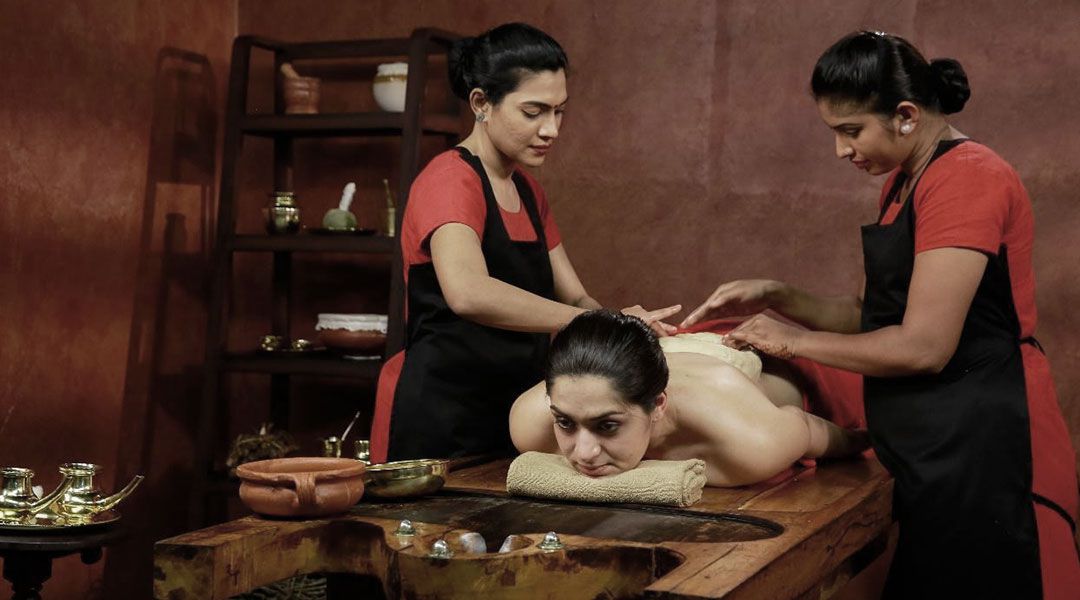
Ayurvedic wellness treatment in India

Ayurvedic wellness treatment in India

Ayurveda is an ancient medicine system of the Indian subcontinent with a comprehensive wellness treatment approach that is recognized as alternative treatment by the World Health Organization (WHO). Ayurveda focuses on individual wellness rather than addressing illnesses. Ayurveda is not a medical system that addresses only diseases but aims to preserve the health of the healthy with its holistic healing process.

With the vision of providing comprehensive natural health care treatment to all our guests, we collaborated with various wellness partners in India (Kerala). The healing team of ASHA traveled intensively and handpicked every wellness resort/treatment center tailored for the health needs of our guests; offering Panchakarma program and Rasayana treatments for skin problems, autoimmunity, various allergies, insomnia, weight management, arthritis, stress management, post-COVID treatment, body detox, hormone imbalance, and more

Why choose ASHAexperience for the Ayurvedic Wellness Treatment in India?

  • We are a Swiss founded wellness start-up with strong healing ethics and invariably follow European protocol of safety and security from the core for the holistic health intervention, while our guests travel to India for treatment and rejuvenation vacations.
  • The Ayurvedic doctors of ASHA consider particular physical, emotional constitution, as well as the major life force imbalance of every guestguest before undertaking any treatment or suggesting a health program.
  • The Ayurvedic doctors’ team of ASHA is from 4 continents and 25 nations with diverse expertise to understand the health challenges of each guest as per the regional lifestyle.
  • The ASHA healing team with an experience of over 45 years of Ayurvedic and yogic healing, checks the prerequisites of the treatment on behalf of the guests and recommends a suitable guest-friendly Ayurvedic treatment resort in India which supports the holistic healing process for each guest’s health challenges.
  • We have exclusive wellness programs for children, women, and men and our doctors completely comprehend and personalize the healing process.

Who can avail of this Ayurvedic wellness Treatment?

  • Anyone and everyone who is healthy but believes in sustainable health program and natural processes of wellness.
  • One who wants to go through the learning and evolving process of self care and wants to detox the mind and body.
  • One who is going through minor or major health challenges and wishes to regain complete health.
  • One whose illness is not treatable by the existing medical system.
  • One who has adverse side effects due to long-term medication.

How to book a wellness treatment program in India?

If you are new to Ayurveda, you may book an initial consultation with one of our Ayurvedic Doctors on our Virtual Clinic to discover the suitable ayurvedic treatment needed for your health condition or wellbeing.

If guests are already being treated by their own Ayurvedic Doctor, they can contact our healing team at healme@ashaexperience.com for a full travel process.

Post consultation, Ayurvedic doctors will advise the guest for the appropriate and actual healing methods which will be followed in India. The pre-healing process may take 45 days to 90 days depending upon the physical condition and the health challenges the guest is expericing.

Once the guest is ready to travel for the treatment, ASHA healing team will arrange a suitable treatment center in India and process all the treatment-related documents to ensure safe travel of the guest.

ASHA will design the most comprehensive treatment travel for the guest for a complete hassle-free travel experience, beginning with picking them up from the Indian arrival airport till dropping them back safely from where they initiated the journey after the treatment.

The personalized wellness treatment and therapies will be constantly administered by the healing team of ASHA as well as competent Ayurvedic doctors of the treatment resort/center for holistic healing and restoring the desired and perfect health of our guests.

We believe in collaborative relationship-based care where our Ayurvedic Doctors, Ayurvedic Practitioner, Ayurvedic Supplement Brands, Ayurvedic Nutritionists & Chefs, Yoga, and Meditation Trainers are in sync. Contact the team who passionately works together to hold your hand in this healing journey.

How ayurveda can help reduce screen fatigue

How ayurveda can help reduce screen fatigue

For most people over the last two years, days are spent shuffling between the table and bed, typing away on laptops or phone screens. The pandemic has brought with it many major lifestyle shifts, but one of the most jarring ones has to be the shift to a digital lifestyle. Computers and phones have a purpose in times of isolation, they have been proven to help work through a pandemic – but finding a balance is a necessity. Schools have shifted to online classes and in-person brainstorming sessions have become Zoom meetings. Connecting with loved ones has turned into virtual interactions and most social interactions take place behind a screen.

Since COVID has begun, exposure to screen time has only increased around the world. A study published by WHO links a decline in sleep quality, neck pain, headaches, high blood pressure to increased screen time. Another study has found links between poor mental health and a rise in anxiety and depression with an increase in screen time. Ayurveda teaches living in harmony and with the seasons and the natural flow of every day. This innate rhythm is disrupted by technology.

People around the world have spent the pandemic locked in their homes, doom-scrolling through Instagram, juggling work-from-home emails and binging on streaming sites – and most have felt its consequences. The nagging pain at the back of our eyes, a dull headache, sensitivity to light and difficulty concentrating. Fatigue and exhaustion from screens is real and it manifests itself both mentally and physically. Technology naturally stimulates the Vata Dosha (Vata manages all the movement in our Mind and Body). When Vata is out of balance, we can feel ungrounded and too much screen time tends to make this feeling worse. As we shift into this digital reality – screen time is here to stay.

So, here are some things one can do to combat that tiredness and practice some much needed digital self care.

Follow the 20-20-20 Rule – Akshi Tarpana (that translates to eye rejuvenation) or soothing the eyes is a part of dinacharya. When working on a computer, remembering to take a break every twenty minutes is a great first step. It almost sounds redundant to say this but everyone forgets to take a break. When one looks at computer screens, they tend to blink 66% less than average. Rest your eyes by looking at an object twenty feet away for twenty seconds and give your eyes a chance to relax. Whatever you’re working on, will always be there when you get back from your break.

Meditate – One of the best ways to cope with digital fatigue is Sattva Vijaya (increasing the quality of clarity). To increase Sattva we can exercise, eat nourishing food, practice breathwork and meditation. A moment of quiet self-awareness can set the tone for the rest of the day. Meditation provides the much needed downtime our brains need to recuperate and be mindful.

Set digital boundaries – Healthy boundaries between our personal and professional spaces have always been important, but with work-from-home it is important for us to separate our workspaces and screen spaces from the spaces in our homes we use to unwind and rest. This helps us balance our Vata in our everyday life.

Connect with nature – Nature helps us soothe our senses, cures Vata imbalances and is grounding. Going on regular walks and connecting with nature supports calm and stable energies, proper digestion and gives the balance we need to manage challenging tasks. Schedule 15-30 minute walks without any screens to practice a physical and mental detox.

Just including these small changes as part of one’s daily lifestyle can provide a lot of relief from the constant screen time that has worked into our lives. Some other basic things to keep in mind are staying hydrated, eating healthy and remembering that prevention is better than the cure. Even if fatigue isn’t felt in the body, practicing and cultivating these values have a great impact in the long run.

Self regulating and actively engaging with computers instead of passively absorbing what is on the screen, practicing mindfulness and healthy digital habits as well as actively connecting with friends, family and peers beyond laptop screens are all healthy boundaries one needs to set for themselves – so we can lead our best lives and be our best selves in these uncertain times.

We believe in collaborative relationship-based care where our Ayurvedic Doctors, Ayurvedic Practitioner, Ayurvedic Supplement Brands, Ayurvedic Nutritionists & Chefs, Yoga, and Meditation Trainers are in sync. Contact the team who passionately works together to hold your hand in this healing journey.
Food practise as per Ayurveda

Food practise as per Ayurveda

Food practice as per Ayurveda

Food which can be taken daily:

  • Old Sastika ( Medicated Navara Rice)- 4-6 months
  • Old Saali(Red Rice)
  • Mudga(Green gram)
  • Saindavam(Rock salt)
  • Amalaka(Gooseberry)
  • Yavam(Barely)
  • Paya(milk -warm in nature)
  • Sarpi(Ghee)
  • Madhu(Honey) – Last three categories should be taken depending on nature or constitution of an individual

Food which should not be taken daily:

  • Valloora(Dried meat and fish)
  • Suska saakam(Dried vegetable)
  • Milk products like Cheese , Butter etc
  • Pork, Beef, Fish, Curd, Masha(Black gram)
  • Curd / Yogurt -especially for Specificic Prakriti (constitution). Instead of Curd / Yogurt can be consumed

Virudha Ahara (Incompatible food):

Any food or drink when combined wrongly together will lead to imbalance in doshas(humors), hamper digestion , produce Aama(Toxins)- leading to diseases or Roga

Each food has its own quality (heavy , dry, oily, soft etc), taste(sweet, sour, salty, pungent etc), energy (hot/cold) and post- digestive effect (vipaka)

List of Incompatible foods :

  • Fish with black gram, honey , milk, spouts , jaggery, radish.
  • Chicken with curd , Yogurt
  • Samyoga Virudha- Banana with milk( or any Sour foods with milk)
  • Milk with green leafy vegetables; milk with dates.
  • Eating contrary to climates- eg- Cold food during winter
  • Mixed in wrong proportions- honey and ghee equal quantity.
  • Agni virudha – intake affecting digestion – eg- eating heavy when hunger is low and vice versa.
  • Dosha virudha- eating sweet, sour and salty food when having kapha related disease – eg- Sinus issues.
  • Upachara virudha- D.Eating heavy during Panchakarma.

Health definition according to Ayurveda:

SAMA DOASHA SAMA AGNISCHA SAMA DHATU MALA KRIYAAHA
PRASANNA ATMA INDRIYA MANAHA SWASTHA ITI ABHIDHEEYATE

Sushrutha Samhita

If there is Normalcy of Dosha, Agni, Dhatu, Mala, (Physical aspects of body) along with pleasantness and contentment of Atma / Soul, Indriya/ Senses and Manna/ Mind then the person is Healthy Only the absence of disease is not considered as Health.

In Ayurveda, to maintain good health we have to concentrate on healthy and wholesome food practices

Balanced Diet:

(According to Charaka Samhita)

  • One should take food in the proper quantity.
  • Quantity depends on the power of digestion. Whatever amount of food is consumed and digested in a timely manner without disrupting normality might be considered one’s correct quantity.
  • Stomach should be filled with – 2 part solid food + 1 part liquid + 1 part air.

We believe in collaborative relationship-based care where our Ayurvedic Doctors, Ayurvedic Practitioner, Ayurvedic Supplement Brands, Ayurvedic Nutritionists & Chefs, Yoga, and Meditation Trainers are in sync. Contact the team who passionately works together to hold your hand in this healing journey.
Brahmi a wonder herb of Aurveda

Brahmi a wonder herb of Aurveda

Brahmi, a wonder herb of Ayurveda 

“The essence of all beings is Earth. The essence of Earth is Water. The essence of Water is plants. The essence of plants is the human being”

You’ve probably seen Brahmi or Bacopa monnieri in its fresh, organic form if you’ve ever walked through the marshlands. This wet-loving, creeping, blooming herb native to the Americas, India, Africa, and the majority of the rest of the world has an important therapeutic role in Ayurveda.

Brahmi is an aquatic creeping perennial plant that is frequently used to adorn fish tanks, although it may be utilized for much more than that. It has a major impact on cognitive function.

Stress manifests itself in a variety of ways, and so do the methods for dealing with it. Brahmi, in conjunction with other herbs, is used to treat mental illnesses such as anxiety, depression, dementia, and ADHD (Attention deficit hyperactivity disorder). This plant is also used to treat inflammatory disorders such as arthritis and ulcers.

Our body, according to ancient Vedic medical practitioners, is made up of physical and spiritual, visible and intangible aspects. Brahmi gets down to the heart of the matter, affecting the most essential component of your being. Brahmi has been regarded as the top contender medicinal plant in the realm of Ayurveda since the time of the Vedas.

Brahmi, which means “godlike” in reference to its excellent reputation for sustaining lifespan and mental vitality, is regarded as potent brain food and is suggested as a cognitive rejuvenator in the Ayurvedic tradition. It’s a popular herb among individuals looking to strengthen and deepen their practice of meditation. Ayurvedic practitioners believe that Brahmi can help with understanding, focus, and remembrance.

Brahmi is typically regarded as safe to combine with other drugs and supplements, and it is most effective after eight to twelve weeks of constant usage. With its long list of advantages, this is one plant that is well worth the wait.

This potent herb may be utilized in a variety of forms, including powder, juice, oils, and pills, but remember to find out the proper dose. Before using Brahmi in your wellness routine, always see an Ayurvedic Doctor.

Brahmi may have been employed in ancient Ayurvedic practices, but now this amazing plant is in the limelight of rising studies supporting cognitive wellness throughout the world.

What are the 5 top benefits of Bacaopa Monieri – Brahmi?

  • Enhances mental clarity and supports memory.
  • Helpful in removing ama (toxins) and acts as a powerful antioxidant and therefore neutralizing harmful free radicals due to its bitter taste.
  • Brahmi oil is great for scalp health reducing dryness, itching, and dandruff whilst calming and soothing the mind.
  • Helps manage stress, anxiety and supports sound sleep.
  • Supports digestive health due to it’s anti-inflammatory properties.

Does Brahmi, a wonder herb of Ayurveda, help in the beauty regimen as well?

The answer to the above question is YES; consistent usage of Brahmi in the skincare routine is believed to improve skin tone and elasticity. Its antioxidant capabilities aid in the removal of pollutants and stimulate cell repair, which tones and maintains the skin appearing younger, as well as brightening the complexion. It works well as an anti-aging component.

Brahmi is a disinfectant and a therapeutic herb. The herb promotes skin healing and is used to treat skin conditions such as eczema and psoriasis.

Brahmi oil is high in vitamin C, which helps to minimize the obvious symptoms of scarring. It smoothes, softens, and hydrates the skin.

If your skin is prone to acne, Brahmi may be the most efficient herbal remedy to keep acne and pimples at bay owing to its anti-bacterial characteristics. A face mask made of organic Brahmi powder, turmeric powder, hibiscus powder, neem powder, Triphala powder, besan (chickpea flour), and water is excellent for keeping the skin clean, oil-free, and acne-free.

Can we consume Brahmi as food?

Yes again, Brahmi leaves are a fantastic addition to your herbal cabinet. It may be eaten fresh from the plant and is commonly consumed as salad greens, but it can also be used in a variety of dishes such as pesto, herbal tea, and nighttime super milk.

We are sure by now you are convinced to explore further about this wonder herb from the Ayurvedic Doctors, Nutritionists, and Chefs at ASHAexperience and order your Brahmi Ayurvedic tablets.

We believe in collaborative relationship-based care where our Ayurvedic Doctors, Ayurvedic Practitioner, Ayurvedic Supplement Brands, Ayurvedic Nutritionists & Chefs, Yoga, and Meditation Trainers are in sync. Contact the team who passionately works together to hold your hand in this healing journey.
Healing role of Ayurveda in treating Cancer

Healing role of Ayurveda in treating Cancer

Cancer

a mere mention of the word makes people shudder and experience a “chill run down their spine”; for it is not something minor. Cancer is a disease that keeps many in prayers and a few more hopes high! While many have succumbed to this disease, there are people who have survived the trauma, with their family’s support. The trends in cancer treatments have changed; from not knowing the diagnosis to identifying medicines to radio and chemotherapy, and alternative medicines playing their roles, the trends have changed. While specialists suggest medication and therapy as treatments for cancer, there are many who have emerged successfully from the battle with alternative treatments such as Ayurveda. Before knowing about what Ayurveda could do, it is important to get a better understanding of cancer.

As per WHO’s (World Health Organization) reports, cancer is a disease in which some cells grow without control and spread to other parts of the body. Through cell division, human cells grow and multiply, biologically. Sometimes, this chain breaks and changes with abnormal cell growth, which generally form as tumors. The nature of the tumor may or may not be cancerous.

While normal cells grow as and when they receive signals, cancer cells grow in the absence of these signals, marking it different from normal cells. Also, normal cells do not move around, i.e, normal cells stop growing when they encounter other cells. Since cancer cells multiply, they are capable of being hidden from the immune system, hence avoiding damage.

So, how does one get cancer?

While there is no one particular cause for cancer technically, rather, researchers believe the cause to be a combination of genetic, environmental, causes, and constitutional characteristics of an individual. Most often, adults are diagnosed with cancer due to their repetitive exposures such as tobacco use, consumption of alcohol, and/or exposure to toxic chemicals; while in other adults and children, genetics play a vital role as the cause.

As the types of cancer are varied, the diagnosis of cancer is classified into two – primary and secondary. Primary cancer is diagnosed based on the origin of the cancer cells; for instance, the cancer cells originate in the lungs, the diagnosis would go by the same name. When the cells spread to another organ, they would still go by the same name and become secondary cancer, and staging in cancer determines the spread and severity of cancer.

How can Ayurveda help in not falling prey to Cancer?

Role of Ayurveda in Treating Cancer

Ayurveda advises us to live according to our constitution, daily and seasonal rhythm, and every once in a while undergoing a Pancha Karma treatment – to prevent or restore the imbalance of Doshas and Dhatus – and a number of conditions can be relieved at an early stage. Ayurveda doctors urge their patients to have more Sattvic foods to balance both body and mind, respectively Doshas and Gunas. Sattvic foods consist of fresh, energizing foods such as fresh fruits and (leafy) vegetables, milk, cereals, pure fruit juices, butter and fresh cheese, fresh nuts, seeds, sprouts, honey, and herbal teas.

How to treat cancer?

The medical field and team are adapting to the dynamics in treating cancer; recent studies have thrown some light to alternative medicine, specifically Ayurveda. Ayurveda, one of the most ancient techniques of treatment, works around identifying the root of a diagnosis using multiple techniques. The core belief in Ayurveda revolves around balancing the body, mind, and spirit for the longevity of life; and ayurvedic medicines include specific diets, herbal medicines, yoga, meditation, and many more. Ayurvedic practitioners believe the combination of nature’s elements increases energy, wellness, along with the prevention of disease.

Apart from the accepted medication process such as surgery and chemotherapy, Ayurveda has also proved to be effective in countries that face difficulty in accessing treatments. A study has shown that Ayurveda has proved to be a wanted treatment methodology among patients hailing from varied economic groups; this treatment method has not only eased their financial burden, it has also eased their psychological burden when compared to opting for surgery.

Various hospitals across the nation are collaborating with institutes focusing on alternative medicine to treat cancer. Experts and therapists prepare modules based on the patients’ diagnoses and are under observation – to understand if yoga helps to improve the quality of life among cancer patients; and, has proven to be less traumatic among patients.

Why is Ayurveda most opted for in recent years?

Ayurveda does not follow aggressive practices in treatment, which marks it different from Western medication. Since the herbs support the purification process, they can determine subtle or major disturbances at an early stage.

Ayurveda advises to live according to the individual’s constitution, as a way to prevent imbalances; following so, many conditions are identified and treated at the early stages. Practicing yoga and meditation improves the stability of the body and the mind; and maintaining a strict diet of having healthy food (more fruits and vegetables, avoiding oil/junk, and so on), has proven to be beneficial for the body, thus reducing the risk of cancer or any other illness.

To learn more about it and have your questions answered by our Doctors, Healers, and Cancer Coach, join us live on February 4th for our upcoming event Healing Role of Ayurveda in Treating Cancer,” and discover the integrative functions of Ayurveda and its applications as the most supportive alternative in Cancer treatment. Click on the link to pre-register yourself and your loved ones for this intriguing complimentary session at the earliest.

We believe in collaborative relationship-based care where our Ayurvedic Doctors, Ayurvedic Practitioner, Ayurvedic Supplement Brands, Ayurvedic Nutritionists & Chefs, Yoga, and Meditation Trainers are in sync. Contact the team who passionately works together to hold your hand in this healing journey.