

[et_pb_section fb_built="1" _builder_version="4.7.4" _module_preset="default" custom_margin="|0px||0px|false|false" custom_padding="0px|0px|0px|0px|false|false" da_disable_devices="off|off|off" da_is_popup="off" da_exit_intent="off" da_has_close="on" da_alt_close="off" da_dark_close="off" da_not_modal="on" da_is_singular="off" da_with_loader="off" da_has_shadow="on"][et_pb_row _builder_version="4.7.4" _module_preset="default" width="90%"][et_pb_column type="4_4" _builder_version="4.7.4" _module_preset="default"][et_pb_post_title comments="off" featured_image="off" _builder_version="4.7.4" _module_preset="default" title_font="|700|||||||" title_text_color="#7d8c68" title_line_height="1.4em"][/et_pb_post_title][/et_pb_column][/et_pb_row][et_pb_row use_custom_gutter="on" gutter_width="2" custom_padding_last_edited="on|phone" _builder_version="4.7.4" _module_preset="default" width="90%" custom_margin="||||true|true" custom_padding="0px|0px|0px|0px|false|true" custom_padding_tablet="" custom_padding_phone="|10px||10px|false|true"][et_pb_column type="4_4" _builder_version="4.7.4" _module_preset="default"][/et_pb_column][/et_pb_row][et_pb_row _builder_version="4.7.4" _module_preset="default" width="90%"][et_pb_column type="4_4" _builder_version="4.7.4" _module_preset="default"][et_pb_image src="http://ashaexperience.com/wp-content/uploads/2026/02/shower.jpg" title_text="shower484" src_tablet="http://ashaexperience.com/wp-content/uploads/2026/02/shower.jpg" src_phone="http://ashaexperience.com/wp-content/uploads/2026/02/shower484.jpg" src_last_edited="on|desktop" _builder_version="4.7.4" _module_preset="default" border_radii="on|2px|2px|2px|2px"][/et_pb_image][/et_pb_column][/et_pb_row][et_pb_row _builder_version="4.7.4" _module_preset="default" width="90%" custom_padding="||0px|0px|false|false"][et_pb_column type="4_4" _builder_version="4.7.4" _module_preset="default"][et_pb_text _builder_version="4.7.4" _module_preset="default" text_font="||||||||" text_text_color="#000000" text_font_size="16px" text_line_height="1.8em" header_2_font="Poppins|600|||||||" header_2_text_color="#e4ac38" header_2_font_size="22px" header_2_line_height="1.4em" header_3_font="|600|||||||" header_3_line_height="1.4em" header_4_font="|600|||||||" custom_margin_tablet="" custom_margin_phone="0px||||false|false" custom_margin_last_edited="on|phone" hover_enabled="0" text_font_size_last_edited="off|desktop" text_orientation_phone="left" text_orientation_last_edited="off|phone" sticky_enabled="0"]
Key Takeaways from this Article
Quick Answers: Cold Showers in Ayurveda
Can cold showers be healthy according to Ayurveda?
Yes. Cold showers can stimulate circulation, strengthen resilience, and awaken the nervous system. Ayurveda encourages mindful exposure to cold when the body is balanced, and digestion (Agni) is strong.
Why do many people resist cold showers?
From an Ayurvedic perspective, resistance often relates to the body’s instinct to protect warmth and stability. People with a dominant Vata constitution may feel more sensitive to cold exposure.
What are the benefits of ayurvedic cold showers for mental clarity?
Cold water activates circulation and alertness, which can support emotional clarity, focus, and resilience when practised gradually.
Are cold showers recommended for everyone?
Not always. Ayurveda emphasizes individual constitution (dosha). Those with strong Vata imbalance or low vitality should approach cold exposure carefully and seek professional guidance.
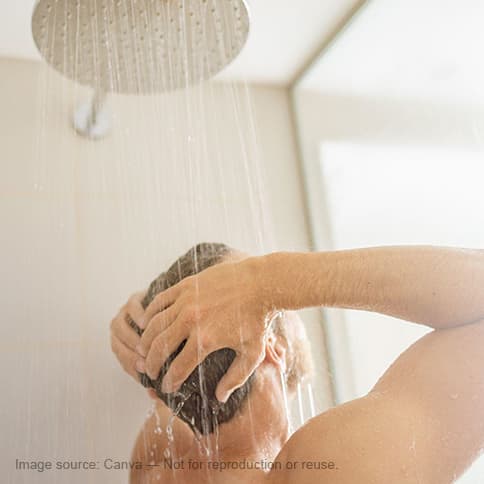
There is a moment many of us know well. We stand under the shower, hand hovering over the tap, already imagining the shock of cold water on the skin. The body braces itself without us asking it to. Our breath becomes shallow. Our mind starts negotiating, maybe tomorrow, or maybe when we feel stronger, maybe when life feels a little calmer.
Cold showers are often spoken about as energising, cleansing, even life changing. Yet for many of us, they feel uncomfortable, intimidating, or simply too much on an already full day.
Ayurveda does not dismiss this resistance. Instead, it listens to it.
Because the way we respond to cold often reflects how safe our nervous system feels, how steady our inner rhythm is, and how much support the body truly has in that moment.
Why Cold Feels So Intense to the Body
Cold is not neutral to the body. It is a strong signal. When cold water touches the skin, the nervous system reacts immediately. Breathing changes, muscles tighten, and awareness sharpens.
In Ayurveda, this response is not seen as weakness. It is seen as intelligence.
The body is quietly asking a simple question.
Am I supported enough to handle this right now?
When life has been rushed, emotionally demanding, or physically draining, the body naturally reaches for warmth, softness, and predictability. In those moments, cold can feel like too much, too soon.
This is why Ayurveda never treats cold showers as a trend or a challenge to push through. They are a practice that must meet the person exactly where they are.
How Ayurveda Understands Cold and the Doshas
Ayurveda looks at cold through the lens of balance, not extremes. The effect of cold water depends on the doshas and the current state of the nervous system.
- Vata is already cold, dry, and sensitive. Too much cold can increase anxiety, restlessness, or fatigue if the body is not grounded first.
- Pitta carries heat and intensity. Cold can feel soothing and calming when used gently and with awareness.
- Kapha tends toward heaviness and stagnation. Cold can feel invigorating and clarifying when the body is strong enough to receive it.
Most of us are not purely one dosha. We move between them depending on stress, sleep, emotions, and season. This is why Ayurveda never recommends cold exposure in a fixed or rigid way.
The real question is not whether we should take cold showers.
The real question is what the body needs right now.
Cold Showers and Emotional Resilience
Beyond physical effects, cold water also has a subtle emotional influence.
When approached gently, cold exposure can teach the nervous system how to stay present during discomfort. It helps the breath soften even when the body feels challenged. Over time, this can support emotional steadiness and resilience.
But when cold is used without care or awareness, it can do the opposite. It may increase tension, create resistance, and push the system into survival mode.
Ayurveda reminds us that emotional strength does not come from forcing the body. It grows when discomfort is met with patience, trust, and the right timing.
An interesting article: Ayurvedic path to emotional clarity
How to Start Cold Showers the Ayurvedic Way
Instead of sudden exposure, Ayurveda encourages gradual adaptation.
Ayurveda does not ask us to jump into extremes. It asks us to build capacity slowly.
- Start with contrast, not shock
Warm water followed by a brief moment of cool allows the nervous system to adjust without feeling overwhelmed. - Pay attention to the breath
If breathing becomes tight or panicked, the body is not receiving the practice well. Calm breathing matters more than water temperature. - Choose the right moment
Cold exposure after movement or exercise is often better received than early morning, when the body is still waking up. - Skip cold on low energy days
Ayurveda respects cycles. On days of exhaustion, illness, or emotional heaviness, warmth can be more healing than cold.
Cold showers are not about discipline. They are about relationships with the body.
Why This Awareness Matters
We live in a world that often encourages us to push, optimise, and harden ourselves in the name of resilience. Ayurveda offers a quieter understanding.
True strength comes from knowing when to stimulate the system and when to soothe it. When cold is introduced with awareness, it can sharpen clarity, lift energy, and support emotional steadiness. When forced, it can drain the very vitality we are trying to build.
Understanding this difference helps us use cold as a tool for balance, not pressure.
Why Do Cold Showers Feel So Difficult at First?
Ayurveda explains that the body naturally seeks warmth and stability. Sudden cold exposure challenges the nervous system, which is why many people initially resist it. However, gradual adaptation can build resilience and awaken circulation.
What Does Ayurveda Say About Cold Water and the Nervous System?
Cold water stimulates the body’s alertness mechanisms and can sharpen awareness. In Ayurvedic thinking, this can support mental clarity when practised in moderation and aligned with one’s constitution.
Can Cold Showers Improve Emotional Balance?
Short exposure to cold water may help reset the stress response and improve emotional resilience. When combined with breath awareness, it becomes a practice of mindful discipline rather than discomfort.
Learn: Ayurvedic Wisdom for Happy Hormones
Cold Showers and the Modern European Lifestyle
In cities such as Geneva, Zurich, and Berlin, many people search for natural ways to improve energy, mental clarity, and resilience without relying solely on stimulants or medication.
Ayurvedic lifestyle practices—including mindful cold exposure, breath regulation, and balanced nutrition—offer practical tools for supporting modern wellbeing.
Ayurvedic Perspective on Cold Showers
Ayurveda views health as a balance between environment, lifestyle, digestion, and emotional resilience. Practices such as mindful cold exposure are not quick fixes, but small daily disciplines that help restore clarity, stability, and vitality.
A Gentle Invitation from ASHAexperience
If you feel curious about how practices like cold exposure fit into your own body, emotions, and daily life, we invite you to explore this journey with support.
At ASHAexperience, our team and Ayurvedic doctors help you understand your unique constitution and the rhythms that keep you balanced. Through personal guidance and immersive retreat experiences, we create spaces where the body feels safe enough to restore itself.
Our wellness retreats in Berlin and India offer an opportunity to step away from daily demands and reconnect with inner stability. Through Ayurveda, mindful routines, nourishing food, and guided care, you are supported in rebuilding strength in a way that feels natural and sustainable.
Because wellbeing is not built by pushing through discomfort.
It grows when the body feels understood.
When you feel ready, speak with our team.
FAQs
Are cold showers good for immunity?
Cold exposure may stimulate circulation and resilience. In Ayurveda, balanced digestion and lifestyle routines remain the foundation of strong immunity.
Do cold showers help with mood?
Short cold exposure can activate alertness and mental clarity, which may support emotional balance when practised consistently.
When should cold showers be avoided?
Cold exposure may not be suitable for individuals with low vitality, severe Vata imbalance, or during illness.
How long should a cold shower last?
Beginners often start with 5–10 seconds of cold water and gradually extend the duration as the body adapts.
[/et_pb_text][/et_pb_column][/et_pb_row][/et_pb_section][et_pb_section fb_built=”1″ _builder_version=”4.7.4″ _module_preset=”default” background_color=”#fff” custom_margin=”|0px||0px|false|true” custom_padding=”0px|0px||0px|false|true” da_disable_devices=”off|off|off” collapsed=”on” da_is_popup=”off” da_exit_intent=”off” da_has_close=”on” da_alt_close=”off” da_dark_close=”off” da_not_modal=”on” da_is_singular=”off” da_with_loader=”off” da_has_shadow=”on”][et_pb_row use_custom_gutter=”on” gutter_width=”2″ custom_padding_last_edited=”off|desktop” _builder_version=”4.7.4″ _module_preset=”default” width=”90%” custom_padding=”50px||||false|false” custom_padding_phone=”|10px||10px|false|true”][et_pb_column type=”4_4″ _builder_version=”4.7.4″ _module_preset=”default”][et_pb_text _builder_version=”4.7.4″ _module_preset=”default” text_font=”||||||||” text_text_color=”#818181″ text_font_size=”16px” text_line_height=”1.8em” header_2_font=”Poppins|600|||||||” header_2_text_color=”#e4ac38″ header_2_font_size=”22px” header_2_line_height=”1.4em” header_3_font=”|600|||||||” header_3_line_height=”1.4em” text_font_size_last_edited=”off|desktop” text_orientation_phone=”left” text_orientation_last_edited=”off|phone”]Images used in this blog include licensed content from Canva. Such images are provided for illustrative purposes only and may not be copied, reproduced, or reused without proper authorization.[/et_pb_text][/et_pb_column][/et_pb_row][/et_pb_section][et_pb_section fb_built=”1″ _builder_version=”4.7.4″ _module_preset=”default” background_color=”#f1f1ef” da_disable_devices=”off|off|off” da_is_popup=”off” da_exit_intent=”off” da_has_close=”on” da_alt_close=”off” da_dark_close=”off” da_not_modal=”on” da_is_singular=”off” da_with_loader=”off” da_has_shadow=”on”][et_pb_row custom_padding_last_edited=”on|phone” admin_label=”Row” _builder_version=”4.7.4″ _module_preset=”default” width=”100%” custom_padding=”|40px||40px|false|true” custom_padding_tablet=”” custom_padding_phone=”|20px||20px|false|true” global_module=”27415″][et_pb_column type=”4_4″ _builder_version=”4.7.4″ _module_preset=”default”][et_pb_text module_class=”font2″ _builder_version=”4.7.4″ _module_preset=”default” text_font=”||||||||” text_text_color=”#333333″ text_font_size=”18px” text_line_height=”1.8em” ul_font_size=”18px” ul_line_height=”1.8em” text_orientation=”justified” text_font_size_tablet=”” text_font_size_phone=”16px” text_font_size_last_edited=”on|phone”]
We believe in collaborative relationship-based care where our Ayurvedic Doctors, Ayurvedic Practitioner, Ayurvedic Supplement Brands, Ayurvedic Nutritionists & Chefs, Yoga, and Meditation Trainers are in sync. Contact the team who passionately works together to hold your hand in this healing journey.
[/et_pb_text][/et_pb_column][/et_pb_row][/et_pb_section]