


You have probably noticed it before. A difficult week arrives and suddenly your digestion feels different, heavier, slower, or just slightly off. Most of us brush it aside and assume it will pass.
But in Ayurveda, this connection between the stomach and the mind is not a coincidence at all.
It is actually one of the clearest signals your body knows how to send, and more importantly, it points toward something hopeful: when you gently support your digestion, your stress often softens with it. The two move together, which means caring for one is always caring for the other.
When Stress Does Not Stay in the Mind
After a demanding day, you may notice that something feels slightly off, even if you cannot quite name it. Meals that usually feel light and easy suddenly sit heavier. Your appetite feels different than normal. You might feel bloated, foggy, or quietly irritable without a clear reason for any of it.
We tend to think of stress as something that lives entirely in our thoughts, in the weight of responsibilities, in unfinished conversations, in things waiting to be done. But very often, the first place stress actually settles is in the stomach, quietly and without announcement.
Most of us have experienced this without really connecting the dots. During busy periods, we eat more quickly and skip the meals we should not skip. We drink more coffee to keep going. Evenings stretch later than they should. And then, almost without noticing, digestion feels slower, sleep feels lighter, and patience feels thinner. It can seem like several separate things happening at once, but in Ayurveda, they belong to one pattern.
If you only take one thing from this: when the stomach feels supported, the mind tends to soften with it.
What Ayurveda Says About This Connection
In Ayurveda, digestion is considered one of the most important foundations of your overall health. The strength of your digestion is called Agni, which can be understood as your body’s inner digestive fire, its ability to take in food, process it fully, and turn it into genuine energy.
When Agni is balanced and working well, food is digested properly, nutrients are absorbed efficiently, and your energy stays relatively steady throughout the day. Emotional balance becomes easier to maintain because your system feels genuinely nourished and supported from the inside.
When stress increases, however, this digestive fire can become irregular and inconsistent. From an Ayurvedic perspective, mental and emotional strain directly affects digestion because the nervous system shifts into a protective state. In that state, the body prioritises alertness and readiness over rest and restoration, and digestion naturally slows down or becomes unpredictable as a result.
Over time, this can create a slow and quiet cycle where stress weakens digestion, and weakened digestion lowers your natural resilience to stress. Each one feeds the other in a way that can be hard to notice until you are already deep inside it.
Ayurveda also teaches something that feels quite profound when you sit with it: digestion reflects more than just the food you eat. It mirrors how you process the experiences of daily life as well. When emotional pressure builds, the body may genuinely struggle to digest comfortably. And when digestion becomes stronger and steadier again, a sense of clarity and calm often returns alongside it, almost without effort.
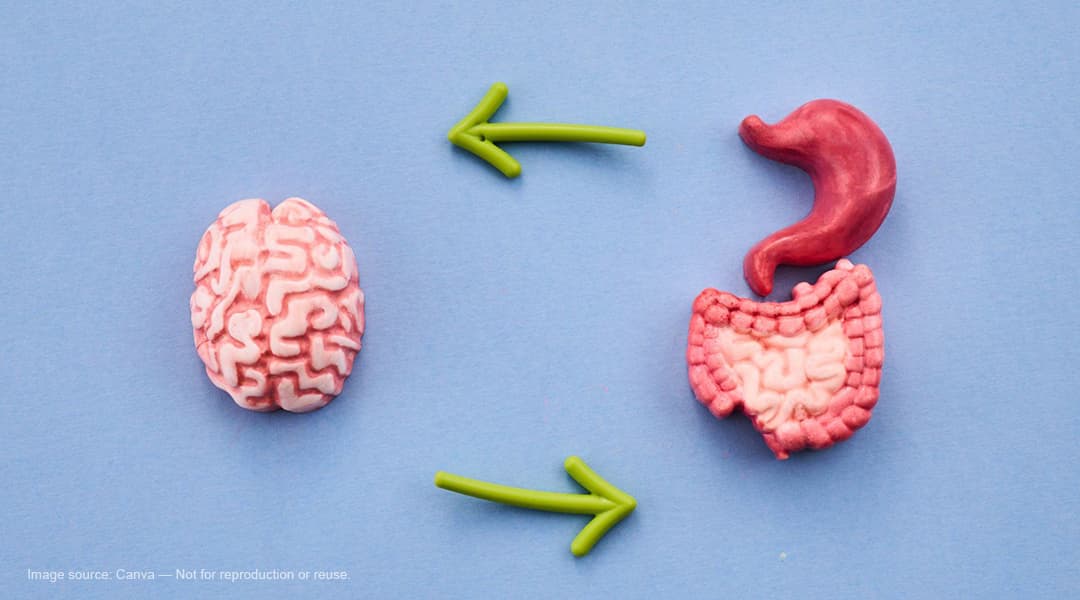
The stomach and the mind are not two separate systems that occasionally send messages to each other. They are part of one intelligent, deeply connected network that is constantly influencing itself.
Sometimes calm does not come from controlling your thoughts. Sometimes it comes from supporting your stomach.
What Modern Science Is Beginning to Discover
Interestingly, modern research is beginning to describe a very similar relationship through what is often called the gut-brain connection.
Scientists now understand that the digestive system and the brain are constantly communicating through nerves, hormones, and chemical messengers. This ongoing conversation helps explain why periods of stress can affect digestion, appetite, energy levels, and even the balance of bacteria living in the gut.
While Ayurveda described this relationship thousands of years ago through concepts such as Agni and the connection between digestion and emotional wellbeing, modern science is increasingly observing many of the same patterns through a different language.
The principles may be expressed differently, but the message is remarkably similar: when digestion struggles, emotional wellbeing often feels less stable. And when digestion is supported, the whole system tends to function more harmoniously.
Sometimes calm does not come from trying harder to control your thoughts. Sometimes it begins by supporting the systems that help your body feel safe, nourished, and balanced again.
Small Ayurvedic Shifts That Support Both
Ayurveda never begins with restriction or a long list of things you are no longer allowed to do. It begins with rhythm, with small and steady adjustments that help the body remember how to function at ease. These do not need to be perfect to work. They just need to be consistent.
- Start your morning with warm water before anything else. Before coffee, before your phone, before the day begins asking things of you. Warm water gently wakes up your digestion and gives your nervous system a calm and grounded start rather than an immediate push into alertness.
- Choose warm, cooked meals when you are feeling overwhelmed. Warm food is easier for your body to digest and is naturally more grounding during stressful periods. It is a small act of care that your body registers more deeply than you might expect.
- Eat at regular times, even when meals are simple. Consistency helps your digestion regain stability. When your body knows roughly when to expect food, it can prepare for it properly, and that small predictability makes a real difference over time.
- Allow dinner to be a little slower and free from screens. This sends a quiet signal of safety to your nervous system. When the body feels safe, digestion improves. And when digestion improves, sleep often follows without as much effort.
- Protect your sleep as much as you realistically can. When sleep becomes deeper and more consistent, both your digestion and your emotional steadiness tend to improve together. They are more closely linked than most people realise.
These are not dramatic changes, and they are not meant to be. They are steady ones. And in Ayurveda, steady changes are the ones that actually rebuild strength from the inside out.
Why It Matters to Pay Attention
When stress shows up in your digestion, it is not random and it is not something to simply push through. It is your body communicating, and it is asking for support before the imbalance becomes harder to ignore.
Ayurveda gently reminds us that healing does not begin by fighting symptoms. It begins by strengthening the foundations that hold everything else up. When your digestion feels stable and supported again, the mind often no longer feels like it is carrying everything on its own. Things begin to feel a little lighter, a little clearer, a little more manageable, without you necessarily being able to explain exactly why.
That is not magic. That is simply the body returning to the balance it was always looking for.
A Gentle Note from ASHAexperience
If anything in this reflection felt familiar, please know that nothing is wrong with you. Your body is responding in an intelligent and very human way. That response deserves to be met with kindness rather than frustration.
At ASHAexperience, our Ayurvedic doctors look at digestion, stress, sleep, and daily rhythm as one whole picture instead of separate concerns. We take the time to understand you, not just your symptoms.
Through personalised consultations and our Ayurvedic retreats in Berlin and India, we offer spaces where your system can slow down, reset, and regain its natural balance.
Healing begins the moment you choose to listen.
When you feel ready, speak with our team.