

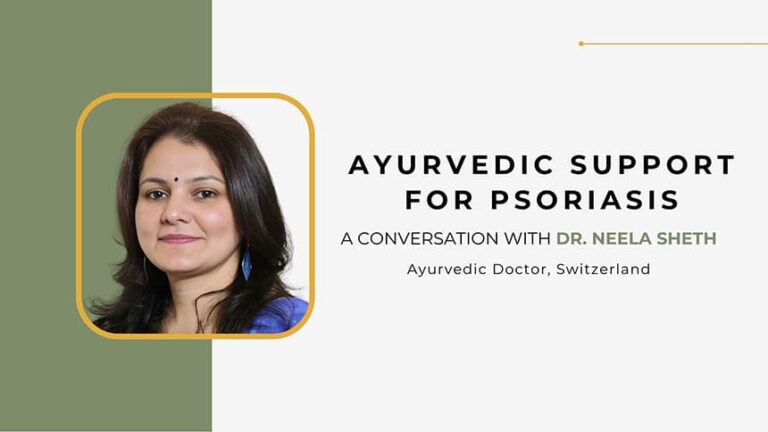
Ayurvedic Support for Psoriasis: A Personalised Approach to Lifestyle, Skin Health and Long-Term Management
Interview with Dr. Neela Sheth, Ayurvedic Doctor, Switzerland
1) What does Ayurveda say about psoriasis?
Dr. Neela Sheth: Psoriasis is a multifactorial chronic inflammatory skin condition, and many different factors may influence how each person experiences it. From an Ayurvedic perspective, we look beyond the skin itself and consider the person as a whole, including how they live, what they eat, the stress they may be experiencing, and other aspects of their physical and emotional wellbeing.
According to Ayurveda, imbalances involving the doshas, or the body’s fundamental principles, may also be considered. These can include patterns involving Vata, Pitta, and Kapha, and understanding these individual patterns helps an Ayurvedic doctor develop a more personalised approach to supporting each person.
This is why Ayurveda places importance on understanding the individual’s lifestyle, nutrition, digestion, stress, and daily habits alongside their wider health picture. Rather than focusing only on what is visible on the skin, the Ayurvedic approach encourages us to explore the different factors that may be influencing a person’s overall wellbeing and identify sustainable changes that may offer complementary support over time.
2) How can Ayurveda support someone living with psoriasis?
Dr. Neela Sheth: Psoriasis is a chronic skin condition that can progress differently from one person to another. How long someone has been living with the condition, their individual health, lifestyle, and their ability to make sustainable changes can all be important considerations when developing an Ayurvedic approach.
We must also recognise that psoriasis can have a relapsing nature, with periods when symptoms improve and periods when they may become more noticeable. This is why Ayurveda does not look only at Ayurvedic preparations or one individual therapy. Instead, the approach may involve a wider, personalised programme that considers nutrition, lifestyle, daily routines, stress, and other aspects of the person’s overall wellbeing.
Psoriasis can also have a significant social and emotional impact because it is a visible condition that a person may live with over a long period of time. It deserves attention and compassionate support. Ayurveda may offer a complementary approach by looking at the individual as a whole and considering the different factors that may influence their wellbeing.
In Ayurveda, we believe that no two people are exactly the same. Each person’s constitution, lifestyle, health history, and individual circumstances are different, which is why Ayurvedic support is highly personalised. This approach is intended to complement, rather than replace, appropriate conventional medical care.
3) Can Ayurveda support someone at different stages of psoriasis?
Dr. Neela Sheth: This question is easier to answer when we understand the individual’s specific circumstances. Someone who has recently begun experiencing skin concerns may have very different needs from someone who has been living with a chronic condition for many years.
When a condition has been present for a long time, it is important to have realistic expectations and understand that meaningful and sustainable changes may take time. We continue to support and motivate the individual while observing how their body responds, so that the Ayurvedic approach can be adapted according to their individual needs.
In Ayurveda, there are different approaches that may be considered depending on the individual. One is Shodhana, which refers to traditional Ayurvedic cleansing and purification practices. Other forms of support may include Ayurvedic preparations, nutrition, lifestyle guidance, and therapies recommended by a qualified Ayurvedic doctor.
For some individuals, an Ayurvedic doctor may consider Panchakarma as part of a personalised programme. Panchakarma is a traditional and structured Ayurvedic process that goes beyond what is commonly understood today as a simple “detox.” Whether it is appropriate should be determined individually by a qualified Ayurvedic doctor, taking into account the person’s overall health and circumstances.
Authentic Ayurvedic Panchakarma programmes should be undertaken in an appropriate environment, under the supervision of qualified Ayurvedic professionals and with suitable facilities. This is one of the reasons I am happy to be associated with ASHAexperience.
Before my association with ASHAexperience, I supported people living with psoriasis primarily through Ayurvedic preparations and recommended milder therapies where appropriate. For individuals who may benefit from a more comprehensive Panchakarma programme, authenticity and appropriate professional supervision are particularly important. Through my association with ASHAexperience, I can confidently refer individuals seeking this type of complementary Ayurvedic support to established centres in India, where authentic Panchakarma programmes are provided in a professionally supervised environment.
A Gentle Note from ASHAexperience
Living with psoriasis can be a deeply personal journey, and finding the right support often begins with understanding your body as a whole. At ASHAexperience, we believe in a personalized approach where Ayurvedic doctors and practitioners, nutritionists, yoga and meditation trainers work together to support your wellbeing with care and attention to your individual needs.
Whether you are curious about Ayurveda, looking for guidance around your daily lifestyle, or simply want to better understand what kind of support may be right for you, our team is here to listen and guide you.
If you feel ready to explore how Ayurveda can support you alongside your existing care, speak with our team. We would be happy to help you find an approach that feels personal, thoughtful, and sustainable for you.